
Help support this site:

To say that the culture we live in today is “interesting” is to be extremely understated. For a podcast like this, I suppose that means that there is plenty of stuff to work with. Though sometimes I’d be happy to have less material.
Sometimes, I feel like I can relate to Professor Kirke in the Lion, the Witch and the Wardrobe when he continues to wonder “what do they teach them at these schools?” It’s certainly not that they teach nothing. For me, it’s as much about what they do teach as it is about lamenting what they don’t.
Our culture certainly has a lot to teach us. Unfortunately, so much of it is terrible, untrue, shallow and misleading. One of the more ubiquitous ideas I’ve heard over the past 10 years or so is about the concept of “my truth.”
As best as I can tell, “my truth” is essentially the idea that if we believe something is true, then it’s true for me. It directly challenges the idea of something being objectively true. However, this seems like something that is fatally flawed.
If I am thirsty and I grab something to drink, no matter how sincerely I believe that I’m about to take a drink of cool, clean water, if the reality is that it’s sulfuric acid instead of water, I am about to have a really bad day.
My sincere belief does not have the power to change reality. No matter what “my truth” is, “the” truth will always win in the end. And that end can be very bad if I dismiss objective reality.
Given the potential dangers of this conflict between “my truth” and the actual truth, perhaps the best question to ask is the same one asked by Pontius Pilate: “What is truth?”
“I (Jesus) am the Way, the Truth and the Life.”
John 14:6b
According to Jesus, He is the truth.
Recently, at our church, we were teaching a lesson to 5th and 6th graders about Matthew 7:24-27. This is Jesus’ teaching about a wise man building his house on the rock and a foolish man building his house on sand.
I don’t think that it’s any coincidence that God is referred to as the “rock” over and over again in the Psalms.
When we interact with the culture around us, we should be conscious of the ideas being promoted and, like the Bereans (Acts 17), measure those ideas against the scriptures to see if they are “rock” or “sand.”
A great way to practice this is to look for some of these cultural ideas while you’re watching shows or movies. For example, who hasn’t seen shows (usually targeting kids) over the past couple of decades that depict the dad as a buffoon who can’t even tie his own shoes? Think about the message that sends…and who the message is being sent to. This idea is repeatedly sent to young kids again and again. Look for that trope the next time you watch a show like that. While you’re at it, see if you can find any other ideas the culture is trying to sneak in.
It’s important to recognize that this is not being done by accident. Thankfully, once you notice it, it loses a good deal of its power because you’re able to see it for what it is, a lie.
As a disciple of Christ, we may think that this is somewhat harmless and not a big deal. However, let’s at a few key passages from scripture:
See to it that no one takes you captive by philosophy and empty deceit, according to human tradition, according to the elemental spirits of the world, and not according to Christ.
– Colossians 2:8
When we immerse ourselves in the culture without being aware of the lies, we can very easily fall for the deception and be taken in by it. We have to learn to recognize the message and measure it against scripture so that we can identify when we’re being deceived.
Now the Spirit expressly says that in later times some will depart from the faith by devoting themselves to deceitful spirits and teachings of demons through the insincerity of liars whose consciences are seared
– 1 Timothy 4:1-2
Here, we see that the sort of lies and deceptions we get from the culture can ultimately cause people to walk away from their faith. When ideas are repeated often enough, they begin to sound, and feel, true.
For the time is coming when people will not endure sound teaching, but having itching ears they will accumulate for themselves teachers to suit their own passions and will turn away from listening to the truth and wander off into myths.
– 2 Timothy 4:3-4
Eventually, as we continue to allow the lies of the culture to shape our thinking and fill our hearts and minds, we will get to a point where we no longer are willing to listen to someone who is speaking Truth to us. When someone starts giving us Truth, we will respond with hostility and anger and, after we’ve essentially told them to “shut up and go away” we return to our happy little echo chamber where we continue to drink out of the fountain of lies the culture provides.
We destroy arguments and every lofty opinion raised against the knowledge of God, and take every thought captive to obey Christ.
– 2 Corinthians 10:5 ESV
The proper response to these cultural lies is to speak truth against them. Study your Bible. Know your scripture. Understand who God is, who Jesus is, who the Holy Spirit is. Understand who the enemy is and learn his tactics and how to counter them.
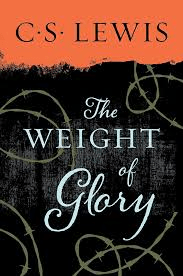
It is passages like these that I believe C.S. Lewis had in mind when he wrote in his essay The Weight of Glory:
Good philosophy must exist, if for no other reason, because bad philosophy needs to be answered.
It is not enough to ignore or downplay the messages from culture. It is because of cultural lies, over the course of decades…even centuries, that the foundation of our culture, and even the Church, begins to crumble. Accepting, or failing to combat these ideas, is essentially to build your house on the sand.
When we compare the lies of the culture to the truths of Christianity, what truth is it that we need to defend? What is the rock we need to build on? Well, the main thing is the “good news,” or as we know of it, the gospel. And how does that work? One place to start is with the “bad news.”
Perhaps one of the easiest ways to understand this is a common tool often referred to as “The Romans Road” which goes something like this:
- for all have sinned and fall short of the glory of God
– Romans 3:23
Every single human being has sinned. None of us have ever lived up to the standard set by God, which is moral perfection. You may not be as bad as someone else, but that does not make you perfect and, I have to tell you, “better than the other guy” is not the yardstick that God uses.
You therefore must be perfect, as your heavenly Father is perfect.
– Matthew 5:48 - For the wages of sin is death, but the free gift of God is eternal life in Christ Jesus our Lord.
– Romans 6:23
Sin separates us from God. God does not “send” people to hell, that is a fate that we earn by not measuring up to His standard. This is justice, the idea that we get what we deserve.
Being separated from God means being separated from everything that is good. The enjoyment of tasting delicious food…gone. The exhilaration of an amusement park ride…gone. The comfort of a warm bed after a long day…gone. Everything that you find enjoyable, pleasant or that makes you happy…gone.
However, salvation is a “free gift.” There is nothing we can do to earn it, or it wouldn’t be a gift.
For by grace you have been saved through faith. And this is not your own doing; it is the gift of God not a result of works, so that no one may boast.
– Ephesians 2:8-9
Unlike the “wages of sin” from Romans 6:23, Paul here shows us that this gift cannot be earned. God, in His infinite wisdom, understood that if we were able to earn salvation, we’d be prideful about it. This way, we have nothing to be “proud” of since we did nothing. - but God shows his love for us in that while we were still sinners, Christ died for us.
– Romans 5:8
Many people often think that they need to clean up their lives before they feel comfortable coming back to church. But God loves us before we are cleaned up. In fact, we can’t clean ourselves up, anyway.
This is where a popular saying comes from: “Jesus catches His fish. Then He cleans them.”
In other words, it is only after we accept Jesus as Lord and Savior that the Holy Spirit starts working in our lives to make us more like Jesus. - because, if you confess with your mouth that Jesus is Lord and believe in your heart that God raised him from the dead, you will be saved. For with the heart one believes and is justified, and with the mouth one confesses and is saved.
– Romans 10:9-10
Our salvation requires us to actually believe in. It is not sufficient to believe that. There is a difference. To “believe that” something is to simply have an intellectual assent to one or more facts or propositions. To “believe in” something is more synonymous with “faith” which is properly understood as “trust.”
In any event, the difference involves whether we believe to the degree that it causes us to put our trust in Him and accept the gift or just give intellectual assent and keep doing things the way we’ve been doing them. - For “everyone who calls on the name of the Lord will be saved.”
– Romans 10:13
This is a promise from the God of the universe. This is something He WILL do for everyone who trusts Him to keep His promise:
The great thing about this is, He has given us several thousand years worth of historical records that show that He always keeps His promise. All we need to do is have faith that He will keep this one.
- Therefore, since we have been justified by faith, we have peace with God through our Lord Jesus Christ.
– Romans 5:1
Once we have accepted Jesus as our Lord and Savior, the grace that was provided by His death, burial and resurrection is used to pay the debt of sin that we owe so that we can be reconciled to the perfect and infinite God. We, then, are seen by Him as good and righteous and worthy of being in His presence. That way, we can enjoy the infinite pleasure and goodness that is God Himself.
Now, I don’t know about you, but that sounds like a foundation of solid rock that you can build your life on.
Until next time..
The Weight of Glory – C. S. Lewis
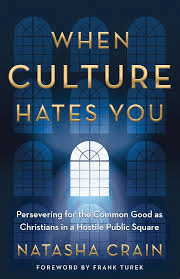
When Culture Hates You – Natasha Crain
 Heart, Soul, Mind and Strength
Leave a comment