
I shared a quote recently about how politics is downstream from culture. I also shared a quote that culture is downstream from theology…and, that in fact, pretty much everything is downstream from theology. Today, we’re going to take a deeper dive into what that actually looks like and how it works.
There will be a number of references I’ll be making to theology and God and the Bible and such and I want to make sure to point out, right from the start, that this will be the Christian God that we read about in the Bible. And that, when I mention the Bible, I am referencing it from the Christian worldview as the inerrant, inspired Word of God.
So, whenever I bring up God or the Bible, that’s what I’m referring to. Some of the concepts can also apply to other gods, but my focus will be the Christian God. Feel free to ask any questions about whether or not there might be application with other definitions of gods, but hopefully, you’ll get enough of an idea that it will be clear.
All that said, we’re going to simply compare two different views on God; God exists or God does not exist. And we’ll look at how these two different positions inform our worldview and life in general. We will cover how theology impacts several different aspects of our lives:
- Purpose
- Suffering
- Human Value
- Morality
- Relationships
Purpose
When it comes to purpose, the theistic view is that God created humans for a purpose. This means that we are here for a reason and we play a role in the entire creation order, even if it’s a relatively small one. But knowing that we are here for a purpose provides us with a certain amount of comfort and helps us to overcome some of the challenges that we will experience throughout our lives. I’ll cover that a bit more when we get to Suffering.
All through human history, people have pondered some form of the question, “Why am I here?” As humans, we seem to have an innate sense that there must be a reason for us to exist at all. If God exists, there is an answer to that question. The very first question of the Shorter Westminster Catechism is “What is the chief end of Man?” The appropriate, doctrinal response to that question is “To glorify God and enjoy Him forever.”
According to Genesis 1:26, God made us to rule over His creation and Ephesians 2 says we were created to “do good works.” God enjoys when His creation does good things. Most of us are a bit like that. When we create something, we enjoy seeing it used according to its purpose.
But, what happens to purpose when one holds the view that God does not exist? If God doesn’t exist, then we are stuck with the belief that we are the result of a long string of cosmic accidents, which means that we do not have any sort of “purpose” to speak of. It ultimately comes down to the idea that our “purpose” is simply to gratify our own desires to whatever extent we may.
Just look around you. As you see people continue to move away from belief in God, it seems abundantly clear that more and more people are living their lives in exactly that way. Everything they do is about personal enjoyment and pleasure. We are gradually, but steadily, becoming a hedonistic, narcissistic society.
People are willing to do something good for someone as long as it doesn’t cost them too much or take too much effort. They weigh the price of doing good against the social capital they get from people perceiving them as righteous. We’ll get more into that later.
But, when all you have to justify your existence is the pleasures of this life, what do you do when things go wrong?
Suffering
If God exists as popularly understood for centuries as the all knowing, all good, all powerful divine being who inspired the Bible, and that what He teaches in the Bible is true, then we believe there will be a life after this life during which we get to spend an endless amount of time enjoying God and His inexhaustible goodness. Over time, any suffering we experience in this life will shrink to insignificance.
Even when we are in the midst of a real and present season of suffering, we can take courage and hope in the future we have with Him in heaven. Now, I don’t mean “hope’ in the sense of “wishing” as in “I sure ‘hope’ I win the lottery” or something. I’m talking about the biblical idea of hope, which is looking forward to an outcome we know is certain. So, more like a kid looking forward to the hope of enjoying going to Disneyland with his family next week.
If there is no God, and therefore, no eternal afterlife, any sort of suffering takes away from enjoying the only years of life we get to live. This is not exactly an uplifting thought. While we are enduring suffering, what is there to look forward to? The only thing we ultimately have in our future is the end. How encouraging.
Human Value
The fact that we are made for a purpose helps us to better understand that, as humans, we have intrinsic value. That basically just means that we have value because of what we are, not because of what we can do. While having a purpose can clue us in on the idea that we have value, it’s important to understand where that value actually comes from.
I remember a talk by J.P. Moreland from years ago when I was working toward a Certificate of Christian Apologetics through BIOLA University. He was recounting the story of a school assignment that his daughter was doing which was about Dr. Martin Luther King, Jr. Part of her assignment was discussing the idea of all people being equal in value.
When discussing this concept with his daughter, he asked her what it was about humans that made this true? What do all humans have that gives us equal value? For one thing, it has to be something that every human has and, Dr. Moreland pointed out, it has to be something that we all have in equal measure. It cannot be something that we all have to different degrees; intelligence, physical strength, athletic ability, math skills, artistic ability, etc.
One thing that we all have, according to his daughter, is belly buttons. However, it is unclear how having a belly button gives us any sort of value. So, Dr. Moreland explained to her that, whatever this thing is that everyone must have, it couldn’t be trivial or arbitrary. It had to be significant enough to confer value to us.
Eventually, they arrived at the conclusion that there is only one thing that all humans have in common, that they all have to the same degree, and that is significant enough to make us intrinsically valuable. That is that we are all made in God’s image (see Genesis 1:27).
If, however, God did not create us, then we are obviously not made in His image. In fact, in this case, it seems like the next best option is that we are the result of millions of years of random mutation and natural selection working together to eventually lead to the human life form.
On this view, what reason could there be to see humans as any more or less valuable than any other life form? Or any other object, for that matter? We are just one of a potentially infinite number of life forms in the ongoing evolutionary process. We are nothing more than a transitional life form, evolved from something else and to eventually evolve to something else.
What about that would make anything more or less valuable than anything else in the universe? We’re made of the same type of matter as everything else, we exist for barely a blip compared to the timeline of the universe and, as we saw earlier, there is no real purpose for our being here.
If God does not exist, we are nothing more than the unplanned result of matter being acted upon by laws of physics. If that is the case, there does not seem to be any reason to treat humans as valuable in any meaningful sense of the word.
Morality
If God exists, and created us in His image with a purpose, then we are valuable by virtue of what we are. And if we are truly valuable, how we act makes a difference. There are certain moral values and duties that we are held accountable to. Because God created u and is perfectly good and unchangeable, He is the foundation upon which we ground morality. It is God who determines what is “good” or “evil” or what is “moral” or “immoral.”
Because these moral values and duties are grounded in the character of an unchanging God, this moral law is unchanging as well. If an action is moral or immoral, it is so because it either comports with God’s character or it does not. What we think about it does not change the moral equation.
It was this idea that prompted a meeting with a certain King in 1215 and was recorded in a document known as the Magna Carta. According to this document, the king was forced to recognize that there was a law above the king. While John was King of England, Jesus was and is King of Kings and He is sovereign over all earthly kingdoms. This recognition was a monumental admission at that time, and it ended up inspiring some of the foundational ideas upon which the Founding Fathers based their ideas for the Declaration of Independence and, later, the Constitution.
If we do not have an unchanging God to whom we can appeal, what recourse do we have when people harm one another? What is the foundation of our morality? Does everyone just decide their own morality?
If you follow that idea to its inevitable conclusion, that leads to some scary results. In the Bible, the book of Judges mentions somewhat regularly that the people “did what was right in their own eyes” and it was not pretty. If you’d like a better idea of what that would look like, watch any of the “Purge” movies. I don’t think we can base morality on each individual person.
What if it’s based on what society agrees upon? This is commonly referred to as “social contract theory.” The idea is that the society determines what is right and wrong and members of the society are held to these moral standards so they can maintain some sort of order.
At first blush, this sounds pretty good. But again, if we follow this to its logical conclusion, we realize that this can lead to some disturbing results. Think about some of the most famous social reformers in history; people like Dr. Martin Luther King, Jr., Mahatma Gandhi, Susan B. Anthony, or Frederick Douglass.
If society determined morality, these people could not be considered “heroes.” After all, if moral standards are decided upon by society, anything that goes against these societal standards is, by definition, immoral. Rather than being heroes, these social reformers would be villains. You could never claim that these people improved society, only that they changed it.
The other side of the coin is just as bad. If society determines what is right or wrong, how are we to judge other societies for their agreed upon moral values? If another society, like the circa 1930’s society in Germany, decides that exterminating the Jews is virtuous, you and I may not like that idea, but since we are not a part of that society, we have no say in the matter.
The fact is, without a moral lawgiver to ground our morality, there is no objective foundation for any moral system. It becomes arbitrary. If one person or group holds one set of moral values and duties and another person or group holds a different set of moral values and duties, what happens when the two conflict with one another? There is no outside, objective source of morality to appeal to like with what happened at Runnymede in 1215. Therefore the only way to settle the issue is by force. Whoever is stronger gets to decide.
Would you want to live in that kind of world? I certainly wouldn’t. I think it is much more plausible, and much more clear, that we have an unchanging, objective standard for our morality so that we can all be subject to the same values, duties and obligations. That way, we can better live with one another in something more like harmony.
Relationships
It’s that idea of living in harmony that leads us to look at the importance of our relationships. One of the clues that we are made in God’s image is our need for relationships. Before God created anything at all, He lived in a perfect relationship as Father, Son and Holy Spirit. There was a perfect and complete loving relationship between these three.
Part of being made in His image means that we are made for relationships, both with Him and with each other. It is within these relationships that we are able to show love through things like self-sacrifice, generosity, courage, compassion, patience, mercy, etc.
These virtues are, to some degree, what helps us to develop deeper, more intimate relationships with each other. Generally, people do not look forward to developing relationships with someone who is mean, selfish, cruel and rude.
These kind of people can really cause a lot of frustration. I think that is because, to a large degree, since we are made for relationships, being around someone like that creates a certain kind of relational discord. On the one hand, we want to be around people…on the other hand, someone like that is difficult to be around. It’s like a relational dissonance.
Now, what about if God doesn’t exist? Without God, these virtues (such as being generous) aren’t “good.” They just are. If there is nothing to ground their “goodness,” then they are simply behaviors. Some people may prefer those behaviors, but there is no objective sense in which they can be “good.”
Conversely, without God, being angry, mean, bitter or rude are not actually “bad.” Again, they just are. Maybe you’d prefer not to be around this kind of behavior, but it lacks any sort of moral or ethical designation. All these things come down to is personal preferences.
Without God, the only two primary motivations for our behavior are survival and pleasure. We live in community with others, on this view, primarily for the survival benefits. There is safety in numbers. You watch my back and I’ll watch yours.
As for pleasure, just look around at our culture and can see how people use each other for their own pleasure. Relationships are merely a means to an end. We can be friends as long as I get something out of it. We can enjoy a romantic relationship until it starts getting difficult.
When you think back to your own relationships, whether with family or friends, think about those people you are closest to. Maybe you’ve had a best friend since you were in third grade and you’ve been through thick and thin with them. The reason that person is so important to you is, at least partly, because there have been difficult times that you’ve gone through with them.
You’ve probably fought, argued, made-up, gotten each other out of trouble, gotten each other into trouble and always come out the other side being closer, your relationship stronger. When difficulties come up, you’ve got so much time and energy invested in each other that you could never just throw away that relationship.
It’s almost as though, as much as our increasingly godless culture tries to teach us that relationships are centered on what we get out of them, we still somehow retain the understanding that there is more to them than that. We long for deeper, longer-lasting, more fulfilling relationships.
Wrap Up
As we wrap up, you may have noticed by now that all of these various things seem to be connected. Our understanding of human value leads to a need for an objective morality which informs our relationships. All of this is wrapped around the idea of a purpose for our being, which helps us get through times of suffering and also provides us an opportunity to show virtues like compassion and generosity. This shouldn’t be surprising. After all, if we are made in the image of a God who is whole and unified, why wouldn’t all aspects of our lives be similarly whole and unified?
At the end of the day, maybe God exists and maybe He doesn’t. If He doesn’t, then it seems as though humanity, and the entire universe, is just one, big, non-rational, meaningless chaotic mess. But, if God does exist, it seems as though all these things fall into place and make sense.
Maybe we can’t understand everything, but we can, to some degree, understand why we’re here. We can take comfort in the future in order to help us endure suffering in the present. We view humans as valuable, due to all of them being made in God’s image. We can understand that there are moral values and duties to God and each other. And, we can better understand the importance of living together in relationships in a deep, loving, self-sacrificing way.
When I think about the implications of the atheistic worldview, not only does it not make sense in light of these things I’ve already covered (and there is a lot more than just what I’ve covered, here), but it’s actually frightening to think about the implications of living in a universe where there is no purpose, nothing particularly valuable about humanity, no hope to get us through suffering and pain, no objective standard of moral values and duties, and relationships that are merely superficial and hedonistic.
This is just a brief overview. Far more has been written about these ideas and I encourage you to do some research on these concepts. Look at both sides of the argument and look at how they respond to either other’s ideas. I think you’ll find the atheistic point of view to be basically empty and hopeless.
For those who understand that God exists and understand who He is, those people are able to overcome and face any difficulty because we have something bigger than ourselves to look forward to. Something good and glorious and never-ending. Our future is so amazing that anything we go through in this life is, as Paul put it, merely a “light momentary affliction.” (2 Corinthians 4:17)
Until next time…
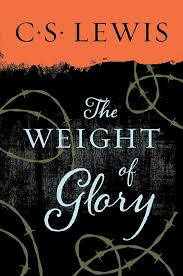
Weight of Glory – C.S. Lewis
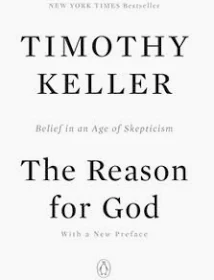
The Reason for God – Tim Keller
 Heart, Soul, Mind and Strength
Leave a comment