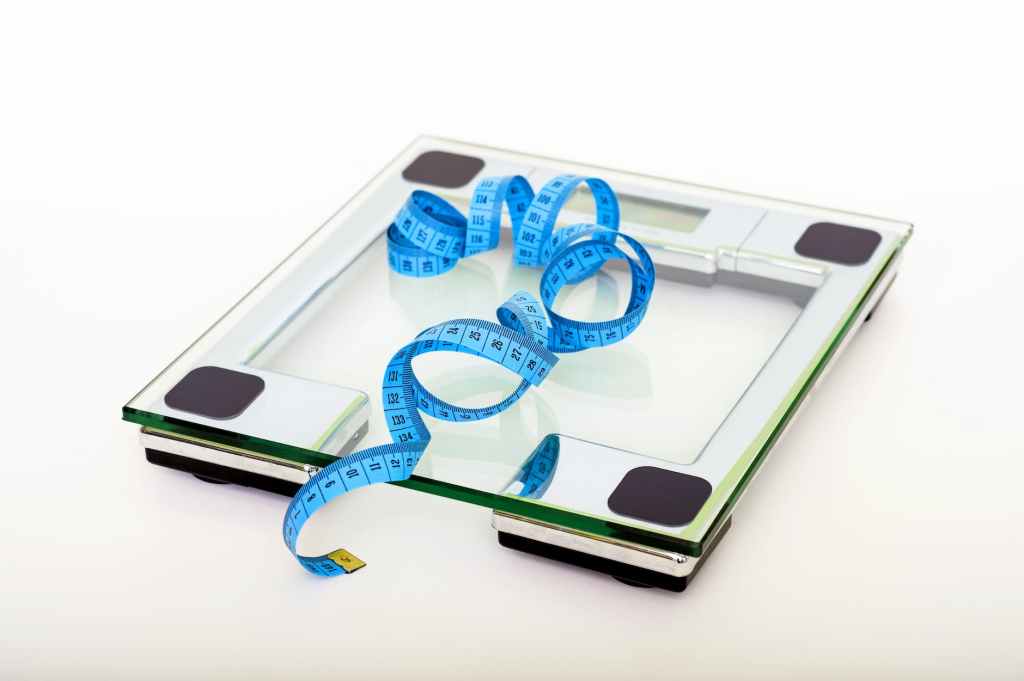
We’ll be covering a somewhat lighter topic this time. Hopefully, it will still be helpful and interesting, even if not quite so ethically loaded. Today, we’re going to do a very high-level overview on Calories and energy balance.
To get started, since I’m such a big fan of words and their definitions, we’ll take a look at some now. First, let’s define what a Calorie is.
A calorie (notice the lower-case ‘c’) is a unit of measurement of energy. It is the amount of energy required to heat 1 gram of water by 1 degree Celsius at sea level. A Calorie (upper-case ‘C’) is actually a kilo-calorie, or 1,000 calories. Whenever we refer to Calories, like on food labels, we’re actually looking at kilo-calories.
Unless you’re working in a chemistry lab or something, you will almost never deal in terms of small calories. Most people only deal with kilo-calories, usually by using the term “Calorie” (upper-case ‘C’).
So, why is it important to understand what a Calorie is? They are the foundation of what fitness professionals refer to as “energy balance.” The food we consume contains Calories. The energy our bodies use to do things like move, heal, and generally stay alive comes from “burning” Calories.
If we consume more Calories than we burn, some of those extra Calories are expelled from our system through various biological processes. The rest are stored for later use. The energy storage mechanism used by the body is called fat. Each pound of fat stores approximately 3,500 Calories.
This is what energy balance is all about. You consume some amount of Calories throughout the day. You burn some amount of Calories throughout the day.
If you consume more Calories than you burn, your body stores the extra energy as fat. This is a “positive energy balance.”
If you consume fewer Calories than you burn, your body taps into existing fat stores in order to access the energy needed to bridge the gap between what you consumed and what your body burned. This, of course, is a “negative energy balance.”
For all the ultra-sciency sounding jargon one hears about weight management, dietary wizardry and even weight loss medications, the simple fact of the matter remains; if you maintain a positive energy balance, you will increase the amount of fat in your body. If you a negative energy balance, you will decrease the amount of fat in your body.
There is literally no other way for this to even possibly work. Your body can’t simply produce Calories from thin air, and any extra Calories can’t just cease to exist.
If anyone tells you differently, either they’re trying to blind you with science, possibly to justify how much they are charging for their services, or they don’t actually understand physics enough to know what they’re talking about in this context.
Now, here is where things get a little tricky. For all intents and purposes, it is impossible to determine the precise number of Calories you take in over the course of any given meal. Yes, I know that you can read the label and weigh and measure everything to the hundredth of an ounce for accuracy. Unfortunately, the Calories reported on most food labels are not entirely accurate. They can be off by as much as 30%.
Couple this with the fact that you also cannot accurately determine the precise number of Calories you burn over a given period of time. The body burns Calories with movement, with electrical impulses in your Central Nervous System, with the functioning of internal organs, etc.
So, there really is no way to know precisely how many Calories you consume over a period of time nor how many Calories you burn over that same period of time. If that is the case, how are you supposed to use any understanding of energy balance to achieve your health and fitness goals?
The way you do that is by taking frequent measurements and viewing the data as a trend rather than individual data points. If you step on the scale every day, for example, you will find that your weight can fluctuate several pounds in either direction from one day to the next. However, if you get an average over seven consecutive days and then compare averages from week to week, you have a better view into how you’re doing with your energy balance.
Some people can find this difficult as they may see that they’ve gained a couple pounds even though they felt like they did really well the day before. This can be discouraging for many people. But remember, there are many factors involved in your overall body weight from day to day. Hydration, the food still working its way through your digestive system, even the weather can have an impact.
Take frequent measurements and look for the trend over time, then make adjustments if necessary. This is all extremely high-level, very simplified stuff, but in reality, that is all you really have to do in order to affect a change in body fat.
Keep in mind, though, this does not necessarily mean it will make you healthier. You could find the desired energy balance by eating just the right number of Calories eating Twinkies and donuts, but you won’t be healthy for very long. Mark Haug tried this by eating junk food while maintaining a negative energy balance and he lost weight.
We’ll get deeper into the health side of things later. For now, understanding what we’ve covered here should be enough to give you a solid foundation to get started on your health and fitness journey.
It really is just that simple. Life is complicated enough on its own. Don’t over complicate it and don’t let other people make you think it has to be complicated.
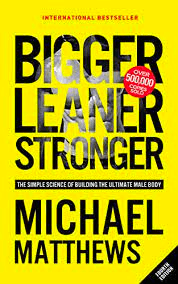
For guys, if you are interested in finding out more about things like energy balance, fitness, and getting stronger and healthier, checkout Mike Matthews’ Bigger, Leaner, Stronger.
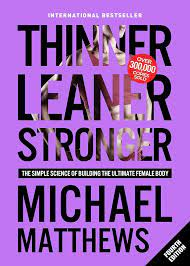
For ladies, if you are interested in finding out more about things like energy balance, fitness, and getting stronger and healthier in a way that it specifically tailored for the female physiology, checkout Mike Matthews’ Thinner, Leaner, Stronger.
 Heart, Soul, Mind and Strength
Leave a comment